
From entrepreneur to food innovator: How Chris Bryson is helping shift Canada’s food sustainability story
- Posted:
Chris Bryson didn’t start his career expecting to help change the trajectory of Canada’s food landscape. An entrepreneur, he focused his post-secondary years on a business education, setting him up with the skills and knowledge he’d need to join the corporate world and eventually launch his own endeavours.

It served him well. After some time in the corporate world, Bryson worked for Aeroplan, where he developed a concept around personalized digital experiences using customers’ loyalty data. It brought to light a new opportunity that wasn’t being considered by the company at the time, but that Bryson saw great potential in: a digital platform where grocers could sell to consumers online.
Eventually, Bryson left his job to found a tech startup, with Aeroplan’s support. “[Aeroplan] acknowledged that some of the things that I was arguing were going to come to the industry … They just felt it was better to invest outside their four walls than inside their four walls,” Bryson said.
With Aeroplan as one of the new company’s, Unata’s, first investors, Bryson grew his idea to such success that it attracted the attention of Instacart. The media and delivery company bought Unata in 2018, at 100 employees and north of $15 million annual returning revenue. Bryson stayed with the company until 2020, with plans to travel. But when he looked at the world’s food system, he knew he needed to shift his focus.
He became an angel investor, helping grow companies that were leading change in Canada’s food system. As he learned about what they were doing and why, however, investing wasn’t quite enough. Bryson saw too much of a gap between meat and its plant-based alternatives. He decided to take more of a direct hand in closing it.
“We are a company that is creating next-generation manufacturing technology,” Bryson said. “This technology is capable of making any number of products, everything from fish to pork to chicken to beef.”

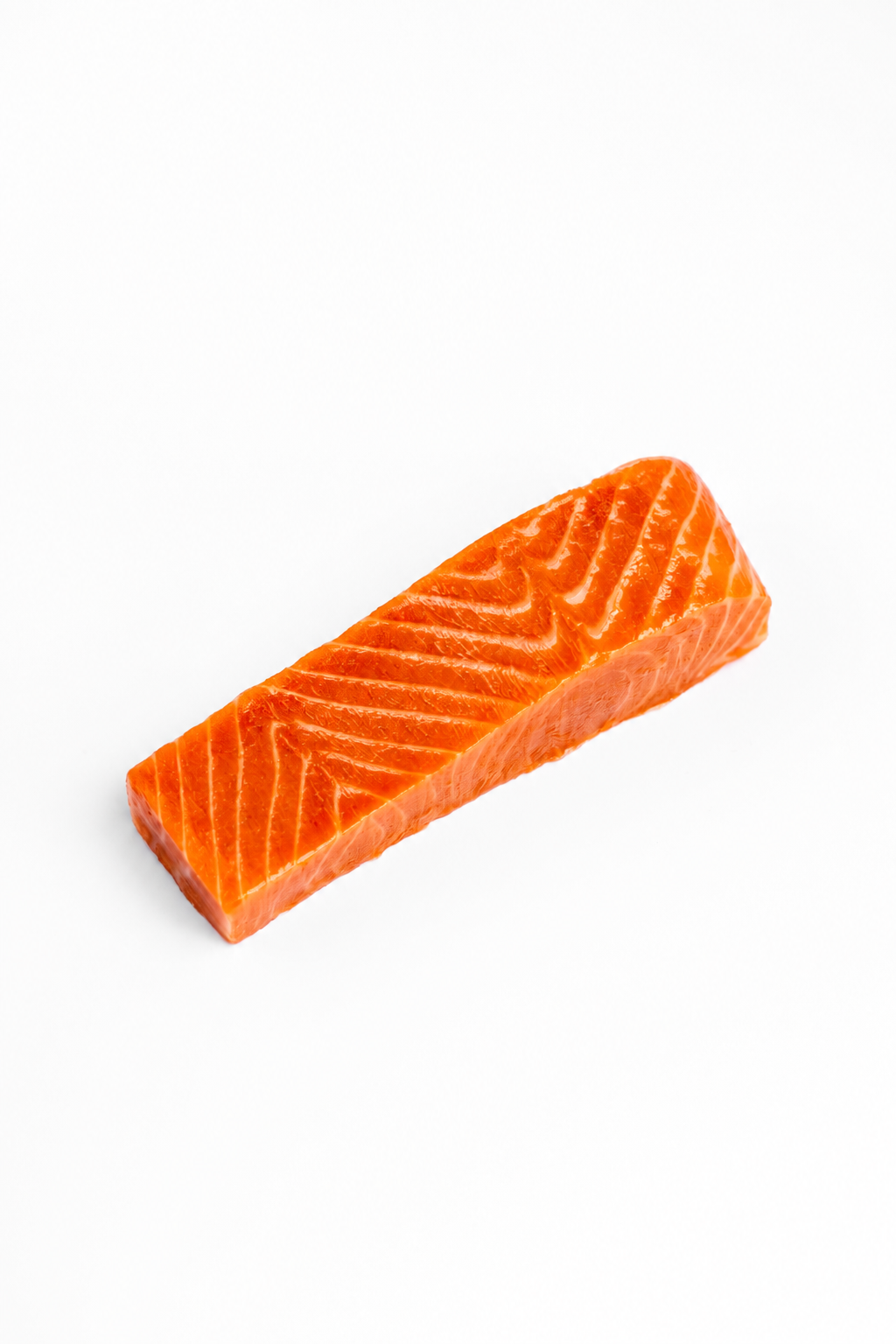
Bryson’s work to create this new technology started with the launch of New School Foods, a company originally focused on funding research projects that would accelerate food innovation in Canada. He started with the development of whole-cut plant-based salmon alternatives—because, as he said, they would be the hardest meat to replicate.
The work was a success. New School Foods developed its salmon alternative through research work with several project partners, including as part of two Protein Industries Canada projects. It’s now available in restaurants across Canada, with its market footprint growing.
With salmon under their belt, Bryson and his company shifted focus once again. They expanded from New School Foods to NS/TX Industries—a technology company that supports the development of a wide range of plant-based meat alternatives. With an aim to develop technology that can make new, more innovative products possible, the company is about more than commercializing product lines; it’s about accelerating a more sustainable food system.
“We’ve already put out a product that five years ago people told me was impossible,” Bryson said. “I think there’s a natural expectation that plants can only do so much. When we show our product to people, they’re genuinely stunned … The fact that we’ve defied expectations is great. I think it speaks to the potential of what this category can be.”
As his company’s work continues, Bryson hopes to continue defying expectations. He expects he won’t stop innovating, and encourages others across Canada’s landscape to do the same. In this way, he says, innovators and entrepreneurs can shift the food system, making it more sustainable for generations to come.
Featured interviewee

Chris Bryson
Founder & CEO
New School Foods