
From pea fields to protein ingredients: LDC’s Yorkton facility opens new opportunities for Canadian crops
- Posted:
When Louis Dreyfus Company (LDC) officially opened its expanded Yorkton, Sask., processing complex on July 23, 2026, the day marked more than the commissioning of a new facility. For LDC, the Yorkton community and Canada’s growing food production and value-added agriculture sector, it represented a major step toward adding more value to Canadian crops closer to where they are grown.
The complex now includes LDC’s first pea protein production facility, alongside an expanded canola processing site. Together, the investments build on LDC’s Yorkton presence, which began with its canola crush operation in 2009, and position the company to better serve rising demand for plant-based, high-protein ingredients across North America and beyond.
“I would say it’s a moment of shared success, especially for the employees and the construction partners that have been very dedicated and working very hard to make that happen,” said Charles-Antoine Dubois, LDC’s Global Head of Plant Proteins and Head of Food & Feed Solutions for Europe.
The opening brought together federal, provincial and local government representatives, community leaders, local partners and approximately 200 LDC employees. Dubois described the day as especially exciting because it celebrated both the new pea protein facility and the expansion of the company’s canola crushing capacity at the same site.
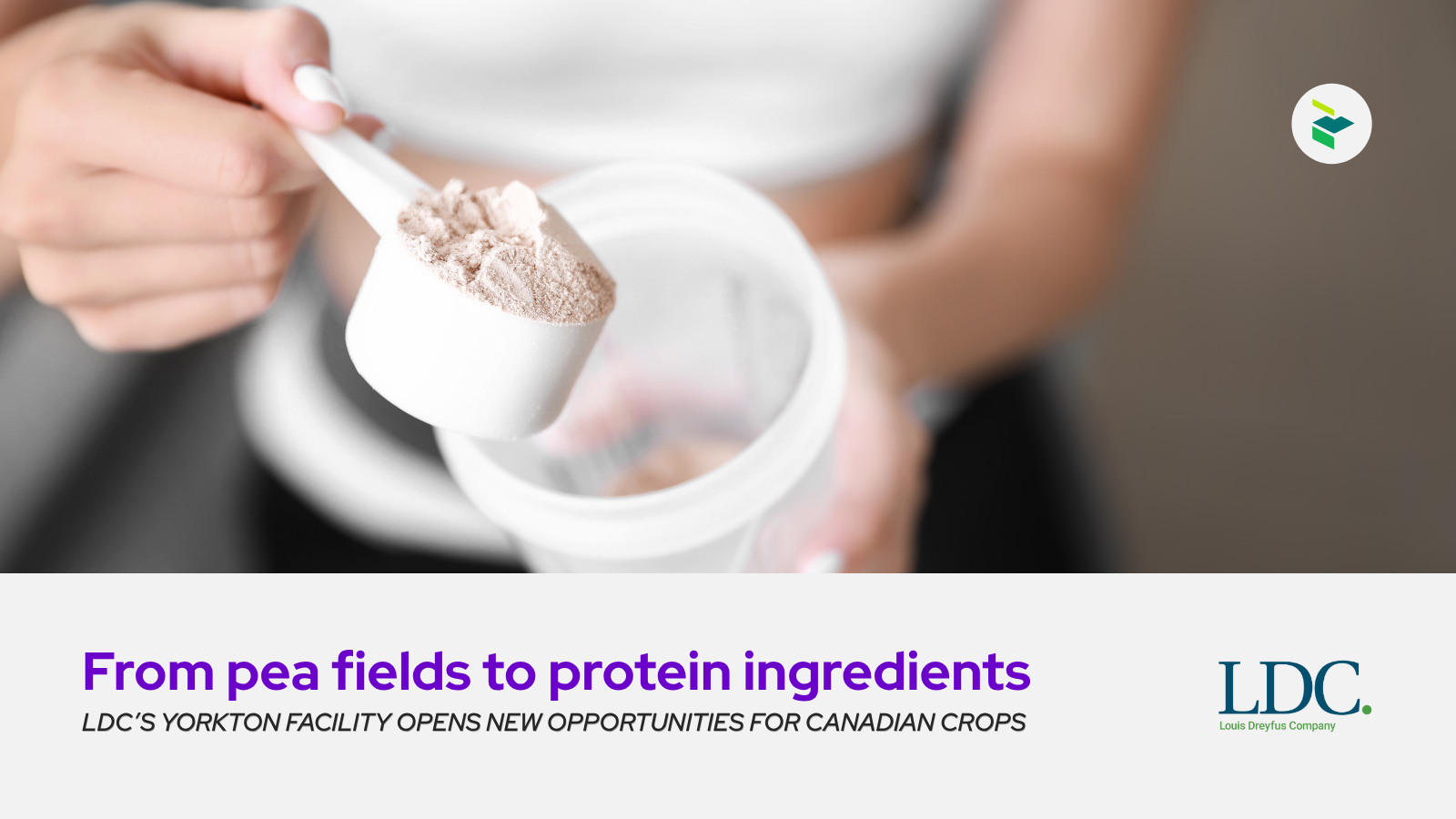
For LDC, the pea protein facility is a milestone in the company’s move into higher-value, plant-based food ingredients. The Yorkton site allows LDC to produce pea protein at scale using proprietary technology and research and development expertise developed by its team. The objective is to meet growing demand for pea protein as more consumers look for high-protein options, including powders, ready-to-drink beverages, bars, pastas, dairy alternatives and other foods.
At the centre of the new operation is LDC’s pea protein product, which contains 82 per cent protein and is designed for clean taste and strong functionality. Those attributes matter because taste and texture often determine whether consumers accept new protein-fortified products.
“Taste is king for our customers,” Dubois said. “When they formulate and develop new consumer products, they want them to be as appealing as possible. If you don’t have the right taste or texture, it’s very difficult to make the product appealing.”
According to Dubois, LDC’s research team spent several years developing a proprietary process to deliver a pea protein with a clean taste and high functionality. High solubility can help beverage manufacturers achieve better performance, while texture and mouthfeel are important in applications such as yogurt and plant-based milk.
The same ingredient platform also offers potential for a wide range of food and nutrition products, including options designed for older adults who are looking to maintain muscle health and manage age-related muscle loss, as highlighted in a Protein Industries Canada project led by LDC in partnership with the Chronic Disease Innovation Centre at Seven Oaks Hospital. By proving out the ingredient’s functionality, the partners are helping ensure Canada’s aging population has continued access to a wide range of digestible, high-protein food options.
The facility is also intended to support whole-crop value creation. In addition to pea protein, LDC is working to commercialize co-products from yellow peas, including pea fibre and pea starch, for use in human food, pet food, construction materials and paper applications.
For Canadian pea growers, the Yorkton investment creates a new, stable market outlet connected to global ingredient demand. Dubois said LDC expects to serve primarily North American markets, while also responding to interest from Asia and Europe. The facility’s location in Saskatchewan, one of the world’s largest yellow pea-producing regions, gives LDC proximity to growers and helps strengthen the connection between Canadian agriculture and finished food products.
Dubois said most of the yellow peas processed at the site will be sourced from farmers within the region, creating a more predictable market while further integrating the facility into Saskatchewan’s agrifood value chain. That local connection is central to how LDC sees the site’s long-term impact.
The work also aligns with partners such as Protein Industries Canada and the Canadian Food Innovation Centre, whose collaboration with LDC is focused on advancing ingredient innovation and helping food manufacturers create products with strong nutrition, digestibility, taste and consumer appeal. By combining Canadian-grown peas, LDC’s processing technology and downstream food innovation, the partners are helping build a more integrated supply chain from farm to finished product.
With the facility now open, LDC’s next priority is to ramp up production and commercial activity, while building long-term relationships with ingredient customers in North America and other markets. The company also plans to continue strengthening its team, its relationships with growers and its connections across the local agri-food ecosystem.
“In the end, the success will be measured by our ability to deliver innovative products,” Dubois said. “We want to continue to innovate in the future, support local agriculture and create economic growth opportunities for the Yorkton community and our partners. That’s the way we will measure success.”